
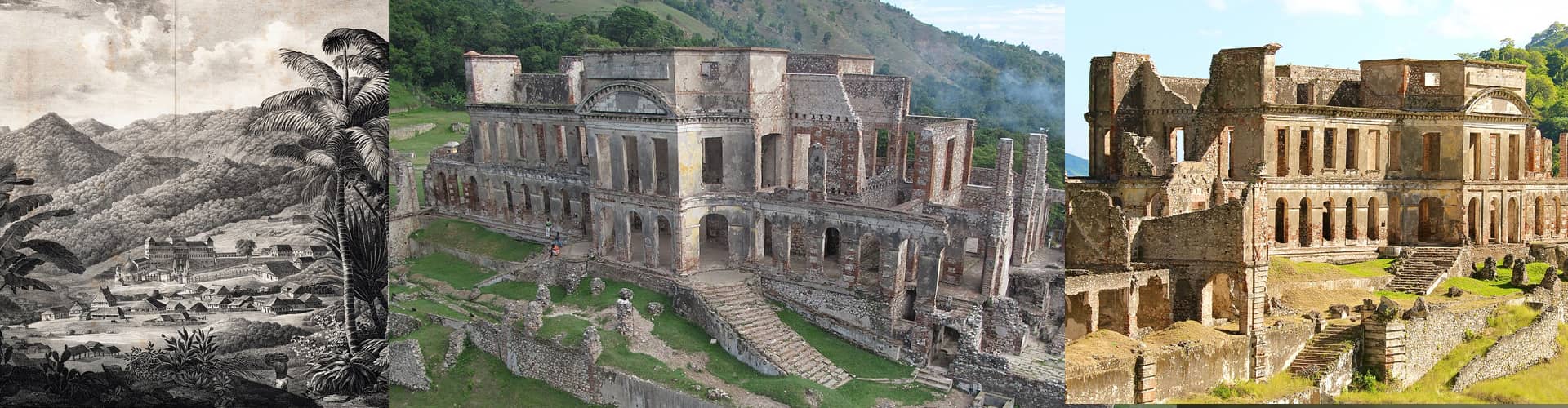
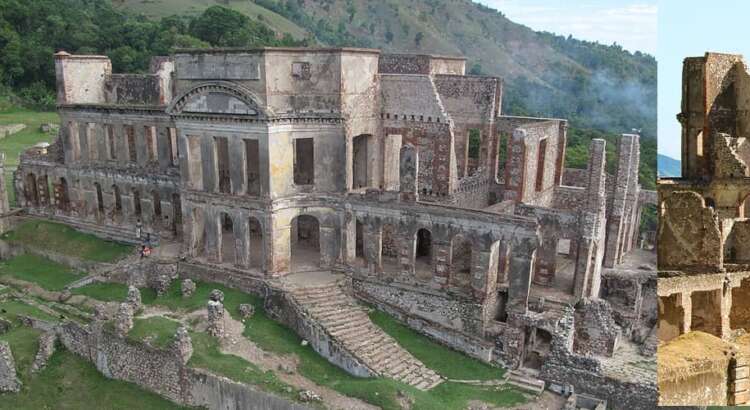
Sans-Souci Palace Haiti is one of Haiti’s most significant historical landmarks and a remarkable symbol of the country’s early independence. Located in the town of Milot in northern Haiti, the palace was built between 1810 and 1813 as the royal residence of King Henri Christophe, one of the leaders of the Haitian Revolution. Inspired by European palace architecture, it was once considered one of the grandest royal residences in the Caribbean.
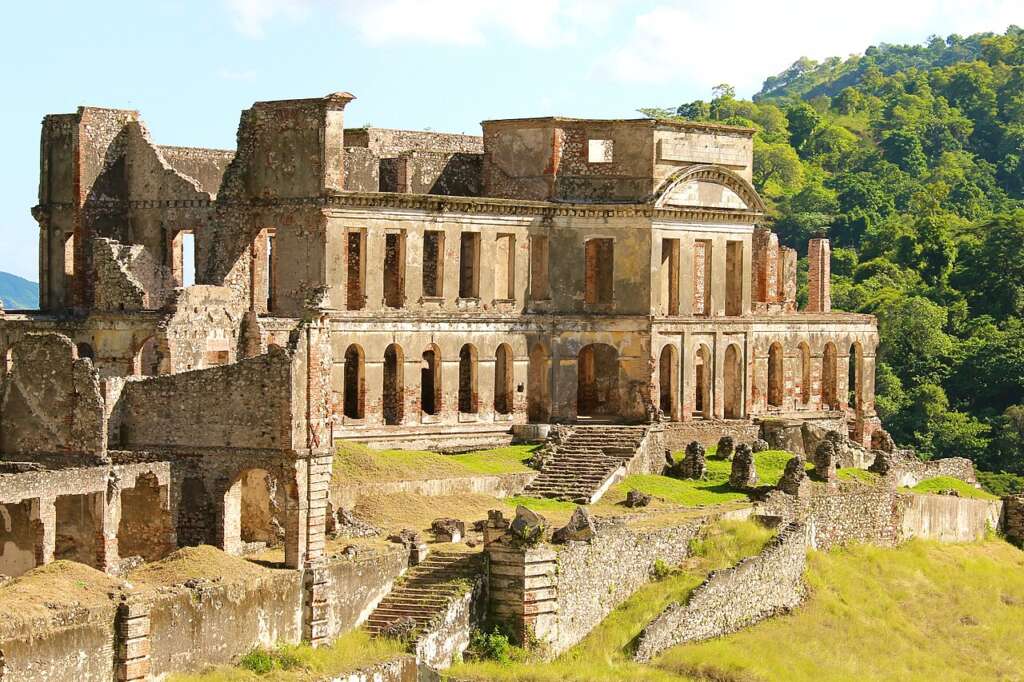
Although much of the palace was destroyed by a powerful earthquake in 1842, its impressive stone ruins continue to showcase its former elegance and architectural brilliance. Wide staircases, towering arches, courtyards, and decorative details allow visitors to imagine the grandeur of Haiti’s royal past.
Sans-Souci Palace forms part of the UNESCO World Heritage Site that also includes the nearby Citadelle Laferrière and the Ramiers complex. Together, these monuments represent Haiti’s determination to preserve its hard-won independence after the revolution.
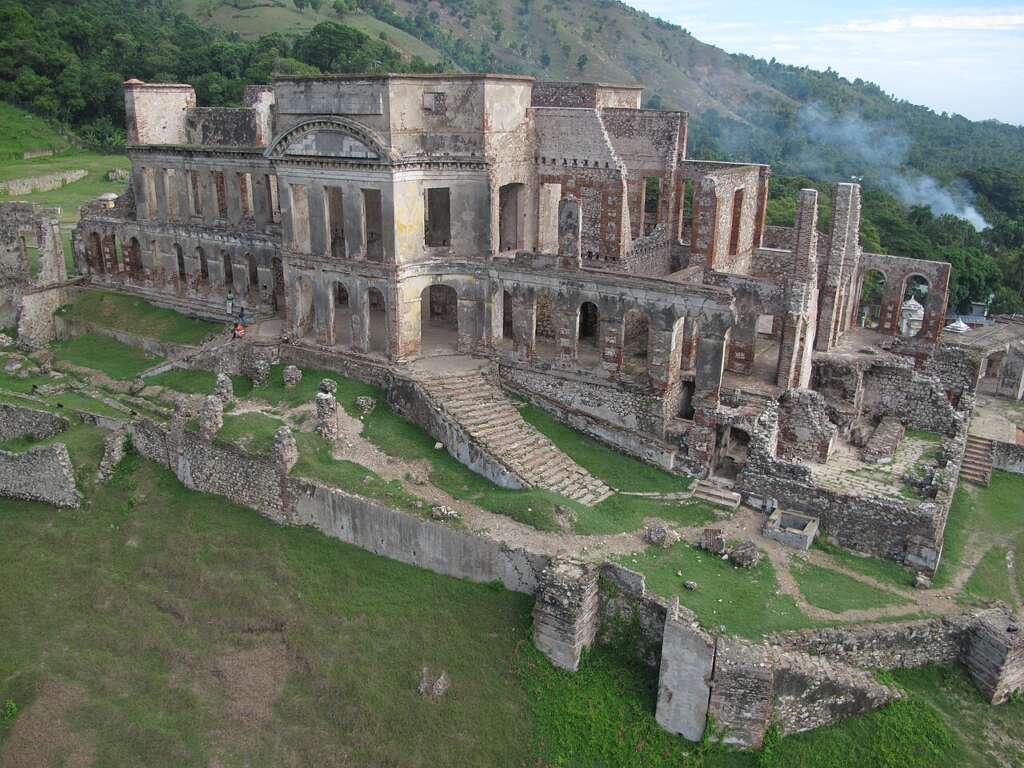
Today, travelers visit the palace to explore its fascinating history, admire the dramatic ruins, and enjoy the scenic mountain surroundings. Combined with a visit to the Citadelle, Sans-Souci Palace offers one of the Caribbean’s most rewarding cultural and historical experiences.
How to Get to Sans-Souci Palace Haiti
By Air
- Fly into Cap-Haïtien International Airport, the nearest airport.
- From the airport, travel by taxi or private vehicle to Milot.
By Road
- From Cap-Haïtien, the drive to Milot takes approximately 30–40 minutes.
- The palace is located near the center of Milot and is easily accessible by road.
By Guided Tour
- Many guided tours from Cap-Haïtien combine Sans-Souci Palace with the nearby Citadelle Laferrière.
Local Transport
- Local taxis and private drivers are available in Milot for short transfers.
Things to Do in Sans-Souci Palace Haiti
- Explore the impressive palace ruins.
- Learn about King Henri Christophe and Haiti’s independence.
- Admire the grand staircases and stone architecture.
- Photograph the historic courtyards and mountain scenery.
- Visit the nearby Citadelle Laferrière.
- Discover UNESCO World Heritage monuments.
- Enjoy panoramic views of the surrounding landscape.
- Walk through the palace gardens and grounds.
- Hire a local guide for historical insights.
- Experience the cultural heritage of Milot.
- Observe the palace’s unique architectural design.
- Visit nearby local markets and communities.
Things Not to Forget for Your Trip to Sans-Souci Palace Haiti
- Wear comfortable walking shoes.
- Bring sunscreen, sunglasses, and a hat.
- Carry drinking water.
- Pack lightweight clothing suitable for warm weather.
- Bring a camera for photography.
- Carry cash for local purchases and guides.
- Pack insect repellent.
- Keep your passport and valuables secure.
- Wear comfortable clothing for walking over uneven ground.
- Respect the historical ruins by not climbing restricted areas.
- Bring a small backpack for essentials.
- Check local travel advisories before your trip.
Best Time to Visit Sans-Souci Palace Haiti Haiti
⭐ Best Overall Time: November to April
- Dry weather and pleasant temperatures make sightseeing comfortable.
- Clear skies provide ideal conditions for photography.
Winter (December to February) ⭐ Highly Recommended
- Mild temperatures and lower humidity.
- Excellent for exploring both the palace and Citadelle Laferrière.
Spring (March to April)
- Warm, mostly dry weather.
- Great conditions for walking tours and cultural visits.
Rainy Season (May to October)
- Frequent rain showers may affect outdoor sightseeing.
- The surrounding landscape becomes lush and green but can be slippery.
Helpful Travel Tips
- Visit between November and April for the most enjoyable weather.
- Combine your visit with Citadelle Laferrière, located nearby, to experience Haiti’s UNESCO World Heritage complex.
- Start sightseeing in the morning to avoid the afternoon heat.
- Hire a local guide to better understand the palace’s fascinating history.
- Wear sturdy footwear, as some paths around the ruins are uneven.
What Happened to Sans-Souci Palace Haiti?
Sans-Souci Palace was built between 1810 and 1813 as the royal residence of Henri Christophe, who ruled northern Haiti after the country’s independence.
What Happened?
- King Henri Christophe’s Death (1820): After suffering a stroke and facing a rebellion, Henri Christophe died in 1820. Following his death, the palace was abandoned.
- Earthquake Damage (1842): A devastating earthquake struck northern Haiti in 1842, severely damaging the palace and leaving it in ruins.
- Historic Landmark Today: Although much of the palace was destroyed, its impressive ruins remain one of Haiti’s most important historical sites and are part of the UNESCO World Heritage Site alongside the nearby Citadelle Laferrière.
Who Built Sans-Souci Palace?
Sans-Souci Palace was built by Henri Christophe, one of the leaders of the Haitian Revolution and later the King of northern Haiti.
- Construction: 1810–1813
- Location: Milot, northern Haiti
- Purpose: It served as King Henri Christophe’s royal residence and the administrative center of his kingdom.
- Builders: Thousands of Haitian workers and skilled craftsmen constructed the palace using European-inspired architectural designs.
At its completion, Sans-Souci Palace was considered one of the most magnificent royal palaces in the Caribbean. Today, its ruins stand as a symbol of Haiti’s independence and are part of a UNESCO World Heritage Site, together with the nearby Citadelle Laferrière.